What Siloed Training Is Really Costing Your Company — And How Collaborative Learning Changes Everything
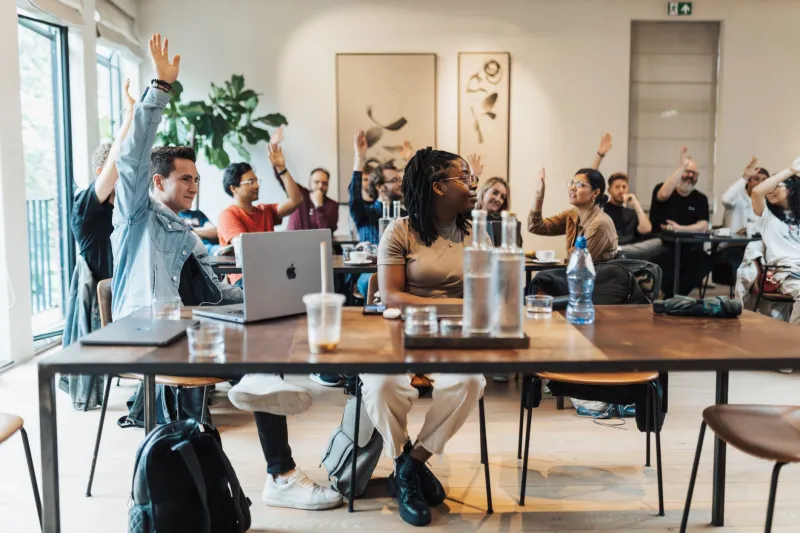
Most organizations invest heavily in employee training. Learning management systems, annual compliance modules, department-specific workshops — the infrastructure is there. Yet despite this investment, many companies continue to struggle with the same persistent challenges: high turnover, sluggish innovation, and teams that rarely speak the same professional language. The culprit, more often than not, is not a lack of training. It is the way that training is structured.
Knowledge silos — those invisible walls that keep skills, insights, and institutional expertise locked within individual teams or roles — represent one of the most underestimated threats to organizational growth in the modern workplace. And the solution may come from an unlikely source: the open-source software community.
The Real Price Tag of Compartmentalized Knowledge
When training is designed in isolation, the costs extend far beyond the learning management system subscription fee. A 2023 survey by Gallup found that US businesses lose an estimated $1.9 trillion annually in productivity due to disengaged workers — many of whom cite limited growth opportunities and a sense of being siloed as primary drivers of disengagement.
Consider a mid-sized healthcare technology firm based in Austin, Texas. Their engineering, product, and customer success teams each had robust internal training programs. Engineers attended coding bootcamps. Product managers completed agile certification courses. Customer success reps cycled through quarterly service training. On paper, the organization was investing in its people. In practice, each department was becoming more fluent in its own dialect and less capable of communicating across functional lines.
The result? Product launches that missed customer needs because engineers and customer-facing staff had never shared a learning space. High turnover among mid-level employees who felt their growth was capped within their own lane. And a culture where innovation happened despite the structure, not because of it.
What Open-Source Culture Teaches Us About Learning
The open-source software movement has long operated on a fundamentally different philosophy. In open-source communities, knowledge is treated as a shared resource. Contributors document their work transparently, invite critique, learn from peers across skill levels, and build on each other's foundations. No one hoards expertise — because the entire model depends on its free circulation.
This philosophy translates directly into organizational learning. When companies shift from closed, role-specific training to open, cross-functional skill-sharing environments, something measurable happens. Teams begin to understand each other's constraints and capabilities. Employees discover adjacent skills they never knew they had. And the organization as a whole becomes more adaptive.
A technology consultancy in Chicago piloted an internal open-skills initiative in 2022, modeled loosely on open-source contribution practices. They created shared learning repositories — internal wikis, cross-departmental lunch-and-learns, and peer-led workshops where any employee could teach a skill and any employee could attend. Within 18 months, voluntary participation in professional development rose by 41 percent. Cross-functional project teams reported higher satisfaction scores. And employee retention in the first two years of tenure improved by 28 percent compared to the prior two-year period.
Breaking Down the Walls: Practical Steps Toward an Open-Skills Culture
Transitioning from siloed training to a collaborative learning culture does not require dismantling existing programs overnight. It requires a deliberate shift in philosophy and a few structural changes that signal to employees that knowledge belongs to everyone.
Start with transparency. Make learning visible across the organization. When a team member completes a course, earns a certification, or develops a new skill, create a mechanism for that knowledge to be shared — whether through an internal newsletter, a shared skills directory, or a brief cross-team presentation.
Design for cross-functional participation. When building new training initiatives, intentionally include participants from multiple departments. A workshop on data literacy, for example, becomes far more valuable when it includes both analysts and marketers sitting in the same room, learning to speak a common language.
Reward knowledge sharing, not just knowledge acquisition. Many performance review systems recognize certifications and course completions. Fewer reward the act of teaching, mentoring, or contributing to a colleague's development. Closing that gap sends a powerful cultural signal.
Create low-stakes contribution pathways. In open-source communities, beginners contribute small fixes before they tackle major features. Organizations can mirror this by offering employees easy, low-pressure ways to share what they know — a ten-minute team demo, a short internal blog post, a peer review of a colleague's project.
The Retention Argument
It is worth stating plainly: employees stay where they grow. A LinkedIn Workplace Learning Report found that 94 percent of US employees said they would stay at a company longer if it invested in their learning and development. But investment alone is not enough. The structure of that investment matters.
When learning is collaborative and transparent, employees feel seen. They understand that their knowledge has value beyond their immediate role. They develop relationships across the organization that deepen their sense of belonging. These are not soft outcomes — they are the structural foundations of retention.
Organizations that treat learning as a shared, open resource are not just being philosophically generous. They are making a strategic investment in the kind of culture that attracts and keeps talented people.
Building Open Skills Starts With a Decision
The shift from siloed learning to an open-skills culture is not a technology problem. It is a leadership decision. It requires acknowledging that the traditional model — where training is delivered to employees rather than built with them — has a ceiling. And it requires the courage to design something more collaborative in its place.
At OpenSkills, we believe that the most resilient organizations are those where knowledge flows freely, skills are built in community, and every employee is simultaneously a learner and a contributor. That is not an idealistic vision. It is a proven model — one that the open-source world has been demonstrating for decades.
The question is not whether your organization can afford to build an open-skills culture. Given what siloed learning is already costing you, the question is whether you can afford not to.